
Roulette is amongst those unique casino games where style meets sheer chance. After years at both land-based and online tables, I still get a minor thrill every time the ball starts its hypnotic spin. The key to genuinely enjoying the game, whether you play live at napoleoncasino or test the digital wheels, isn’t chasing a miracle system. It’s about knowing the unique personality of each roulette variant and adjusting your behaviour accordingly. Too many players treat European, French, and American roulette as interchangeable, when in reality the mathematical structure and betting rituals change enough to make or break a session. I’ve watched seasoned gamblers lose needlessly simply because they ignored the extra zero on an American layout, and I’ve seen complete beginners protect their bankroll beautifully by sticking to even-money outside bets on a French table with the La Partage rule. This guide brings together the essential do’s and don’ts I’ve picked up across dozens of variants, stripped of fluff and delivered in a way that helps you make calm, informed decisions. By the time you reach the final section, you’ll understand exactly which version suits your temperament, which mistakes quietly drain your balance, and how a platform like Napoleon Casino can give you the right environment to practise these principles without pressure.
Understanding the Primary Roulette Variants
Ahead of I discuss the do’s and don’ts, I need to define the three main roulette variants you’ll find most frequently, since every strategy tip derives from the mechanical differences between them. European roulette is the baseline: a single-zero wheel with 37 pockets, offering the house a small edge of 2.70%. I suggest newcomers consider this version as their training ground, since the math are simple and the betting grid familiar. French roulette has the identical single-zero wheel but incorporates two player-friendly rules, La Partage and En Prison, that can reduce the house edge on even-money bets down to just 1.35%. American roulette, in contrast, features a second zero, the double zero, enlarging the wheel to 38 pockets and raising the house edge to a significant 5.26% on most wagers. That gap might seem small, but over a session of a hundred spins it absolutely alters your expected loss. Sometimes you’ll also discover mini-roulette with fewer numbers, multi-wheel setups, or rapid-play formats, and each carries its own nuance. I’ve realized that viewing every wheel as having the identical risk profile is the swiftest way to donate money to the casino. A composed, objective player always verifies the layout before buying in, because simply recognizing the variant you’re up against is already the first do of smart roulette play.
Errors That Can Suck Dry Your Bankroll
If the do’s give you a steady compass, the don’ts are the red flags I’ve learned to spot in my own play and in the people around me. The most destructive behaviour, without question, is chasing losses by raising bet size impulsively. I’ve caught myself doing it early in my gambling life, and it turns what should be a relaxed session into an emotionally charged spiral. Another common error is treating the betting history board as a prediction tool. Every spin is unrelated, and the ball has no memory; believing that a red is ‘due’ after five blacks is a psychological trap, not a strategy. I’d also encourage players not to load up the layout with dozens of chips on every spin. Spreading yourself too thin diminishes any real chance of meaningful returns and hastens your exposure to the house edge across multiple losing positions simultaneously. Perhaps slightly less apparent, but equally dangerous, is ignoring the session clock. Playing tired or after consuming alcohol blurs judgment just enough to slip into that chasing pattern I mentioned earlier. Finally, never assume a bonus or promotion alters the underlying odds of the game; wagering requirements can actually alter the value of a session, and at Napoleon Casino I always review the terms before activating any offer.
- Never run after losses by doubling up aggressively or abandoning your limits.
- Do not trust past results to forecast future spins.
- Steer clear of scattering chips randomly across the layout every single round.
- Never play when sleep-deprived or after alcohol has dulled your focus.
- Don’t activating a bonus without understanding the associated wagering rules.
US Roulette: What to Be Aware Of
American roulette wheels is visually captivating and usually quicker, which is exactly why I handle it with additional caution. That extra second zero pocket changes the house advantage from a tolerable 2.70% to a much steeper 5.26% across most bets. The single exception, the five-number basket bet coinmarketcap.com on 0, 00, 1, 2, and 3, holds an even higher edge of 7.89%. My main advice for this variation is to steer clear of that basket bet; it is arguably the worst single wager found on any standard casino table and I cannot think of a scenario where it holds statistical merit. Should you play American roulette, I recommend sticking strictly to outside propositions such as red or black or the dozen wagers, because there the increased edge still holds but at least you aren’t adding unfavorable bet selection atop a worse base. I also set a strict rule to reduce my session lengths when I play at a double-zero wheel; mathematically your bankroll erodes faster, so managing your exposure acts as a form of self-defense. The pitfalls here are clear: never consider American roulette as your go-to version if a European or French wheel is present at Napoleon Casino or elsewhere, and never get caught in the trap of placing bets on both zeros simply because they appear frequently on the board. That occurrence doesn’t justify the price you pay in long-run expectation.
Gambling Approaches and the Reality Check
No discussion of roulette do’s and don’ts would be complete without a balanced examination at betting methods, because they are the most seductive rabbit hole a player can stumble into. I’ve tested Martingale, Fibonacci, Labouchère, and even the D’Alembert method across hundreds of rounds, and I can declare with total honesty that none of them alter the house edge by even a fraction of a percent. What they do change is the pattern of your successful and unsuccessful plays. The do here is easy: choose a flat-betting approach where you bet the same unit value on each turn, or if you absolutely must use a progression, keep it gentle and within table limits so that you never reach the cap or exhaust your bankroll on a individual cold streak. The don’ts are more abundant, and I have witnessed them singe funds again and again. Never use a negative method that multiplies after a defeat on a table with a low maximum bet limit, because a run of six or seven misses can push you against the cap before you recover. Never think that a system guarantees return; you are merely reallocating exposure over period. And under no conditions should you ever raise your base unit just because you’ve hit a few turns, because the house edge works tirelessly in the backdrop regardless of how sure you feel.
- Employ a flat-betting method as your baseline and only diverge with firm control.
- Recognize that progressions change the pattern of victories and losses, not the anticipated value.
- Verify table limits before committing to any negative method strategy.
- Do not boost your base wager after a winning run; the math are unchanged.
- Treat any system as amusement organisation, never as a mathematical advantage.
Guidelines for Each Roulette Player
No matter of which type you choose, there are a few of actions I view non-negotiable if you aim to remain disciplined and actually savour the game as amusement rather than a frantic recovery mission. These do’s are built on the understanding that roulette is a negative-expectation game. No action you do alters the house edge in the long run, but you can absolutely stretch your time at the table and reduce the volatility. The foremost and most vital do is to verify the wheel type before placing a single chip. I’ve observed players at Napoleon Casino breeze through an American roulette lobby believing it’s European, then question why their funds melts faster than expected. Another key do is to choose outside bets like red/black, odd/even, high/low, dozens, and columns, because they offer more consistent, albeit smaller, wins and keep you occupied without wild swings. I also make it a custom to determine a hard loss limit and a moderate win goal before I log in. Lastly, when a variant offers La Partage or En Prison, I always place at least some even-money wagers to trigger that rule; it’s practically free insurance on nearly half the wheel. All this sounds simple, yet I constantly notice players abandon these principles at the earliest sign of a hot streak, which guides me smoothly into the corresponding don’ts.
- Constantly verify if the wheel is single-zero or double-zero before betting.
- Rely strongly on outside bets to maintain a more consistent bankroll rhythm.
- Set a firm stop-loss and a practical win target for every session.
- Activate La Partage or En Prison policies every time they are offered.
- Practise on free-play tables first if the type is new to you.
France’s Classic Game: A Strategist’s Advantage
French roulette holds a special place in my heart because it rewards caution without calling for extra talent. I’ve consistently seen it stretch modest deposits further than other versions. The wheel is a European single-zero design, but the magic lies in the two rule variations that apply specifically to even-money bets: La Partage and En Prison. Under La Partage, if you bet on red, black, odd, even, low, or high and the ball hits the zero, you immediately get half of your stake back; this cuts in half the house edge on those bets to 1.35%. En Prison provides an identical statistical outcome by holding your even-money wager ‘in prison’ for the next spin, giving it back without penalty if you win and losing it solely if you lose again. I often tell players that simply insisting on a French table whenever it is present at Napoleon Casino is one of the lowest-effort, highest-impact decisions you can make. The do’s here are straightforward: always wager at least one even-money unit on any spin you play, and never get tempted into exotic inside bets that bypass the rule entirely. The only real don’t in French roulette is making your game too complex; the elegance of the game comes from allowing math to silently benefit you, and accumulating high-risk straight-up numbers undermines the goal of choosing the variant in the first place.
Choosing the Right Option for One’s Preference at Napoleon Casino
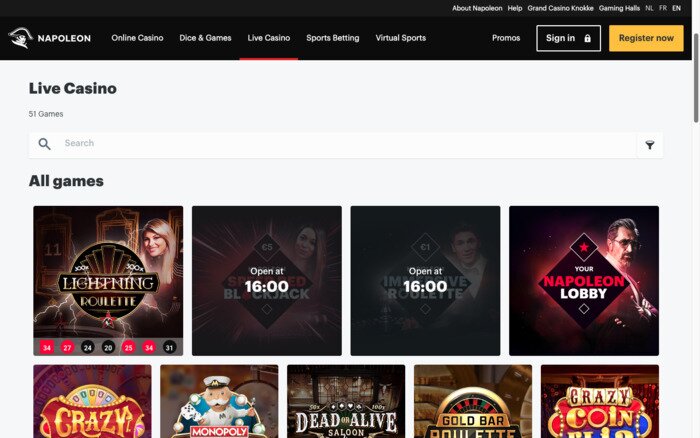
One of the understated joys of playing at Napoleon Casino is that you never need to commit to just one roulette variety. I’ve always found that aligning a version to your playing personality lessens annoyance and boosts enjoyment. If you are a careful player who appreciates the gradual, consistent rhythm of a game where your funds endure for extended periods, French roulette with La Partage is your ideal choice; the low house edge on even-money bets and the soothing rhythm of the game encourage patience. If you appreciate a bit more variety in your inside bets but still want a solid mathematical foundation, European roulette presents the optimal balance. I find it ideal for mixing up my wagers while keeping the long-run cost reasonable. American roulette, with its quicker tempo and elevated house advantage, suits a wholly separate attitude. I use it for brief, lively sessions where I embrace the increased risk as the cost of a more thrilling experience. The proper action here is to sincerely consider what you want from a session: long-term soft enjoyment or a quick dose of thrill, and then pick the appropriate table in the Napoleon Casino lobby. The don’t is to move between variants without adapting your plan and wager scales, because what works beautifully on a French wheel will slowly drain your balance on a double-zero layout. With a serene approach and a slight measure of restraint, roulette ceases to be an enigma and turns into one of the most dependably pleasurable pastimes in the casino, notably when you have the suitable platform to investigate its many aspects.